

کتاب بسیار عالی ضروریات آمار پزشکی
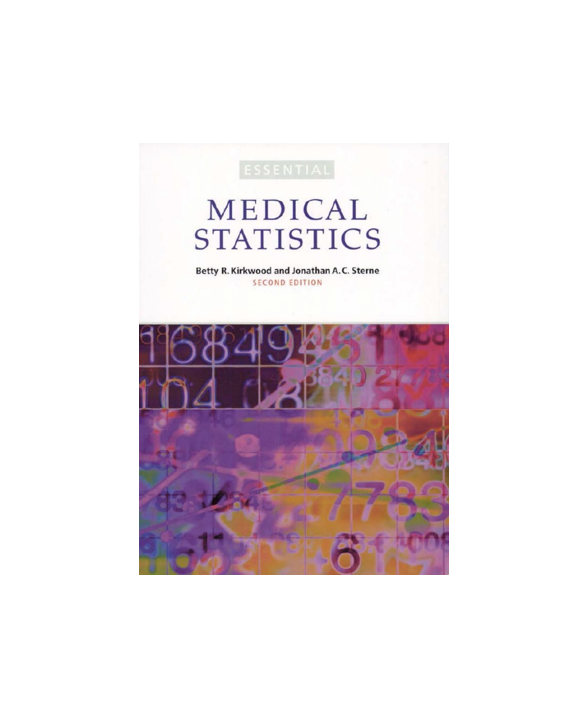
People usually pick up a statistics book when they have data to analyse, or when they are doing a course. This has determined the structure of this book. The ordering of topics is based on a logical progression of both methods and practical concepts, rather than a formal mathematical development. Because different statistical methods are needed for different types of data, we start by describing how to define and explore a dataset (rest of Part A). The next three parts (B, C and D) then outline the standard statistical approaches for the three main types of outcome variables (see Section 1.3). Statistical ideas are introduced as needed, methods are described in the context of relevant examples drawn from real situations, and the data we have used are available for you to reproduce the examples and try further analyses (see Section 1.6). In Part E, we introduce a collection of more advanced topics, which build on common themes in Parts B to D. These are beyond the scope of most introductory texts. The final part of the book (Part F) is devoted to issues involved in the design and conduct of a study, and how to develop an analysis strategy to get the best out of the data collected.
This book is intended to appeal to a wide audience, and to meet several needs. It is a concise and straightforward introduction to the basic methods and ideas of medical statistics, and as such is suitable for self-instruction, or as a companion to lecture courses. It does not require a mathematical background. However, it is not just an introductory text. It extends well beyond this and aims to be a comprehensive reference text for anyone seriously involved in statistical analysis. Thus it covers the major topics a medical research worker, epidemiologist or medical statistician is likely to encounter when analysing data, or when reading a scientific paper. When dealing with the more advanced methods, the focus is on the principles involved, the context in which they are required and the interpretation of computer outputs and results, rather than on the statistical theory behind them.

نسرین تلخی
دانشجوی دکتری آمار زیستی
مشاور آمار، دیتاساینتیست، علاقه مند به برنامه نویسی


دیدگاهتان را بنویسید